5 Big Ideas
“Simply being aware of problems is not enough—what also matters is the willingness of individuals and society to take responsibility for addressing them.” — Jakub Klepal, Executive Director of the Forum 2000 Foundation
Thirty years after the first Forum 2000 Conference, more than 800 participants gathered in Prague under the title Reimagining the Power of the Powerless. Held in the year of the 90th anniversary of Václav Havel’s birth, the conference returned to one of his central convictions: people who appear powerless can reshape societies when they refuse resignation and assume responsibility.
Across the conference, participants considered what this responsibility demands amid authoritarian pressure, geopolitical rivalry, war, and technological disruption. Their discussions pointed to five sources of democratic agency: the courage to live in truth, a stronger Europe within a rebalanced transatlantic alliance, democratic control over artificial intelligence, new forms of mobilization led by Generation Z, and the collective influence of small states. Together, these ideas suggest that democratic power is not simply held by governments or institutions. It is built when citizens and states choose to act.
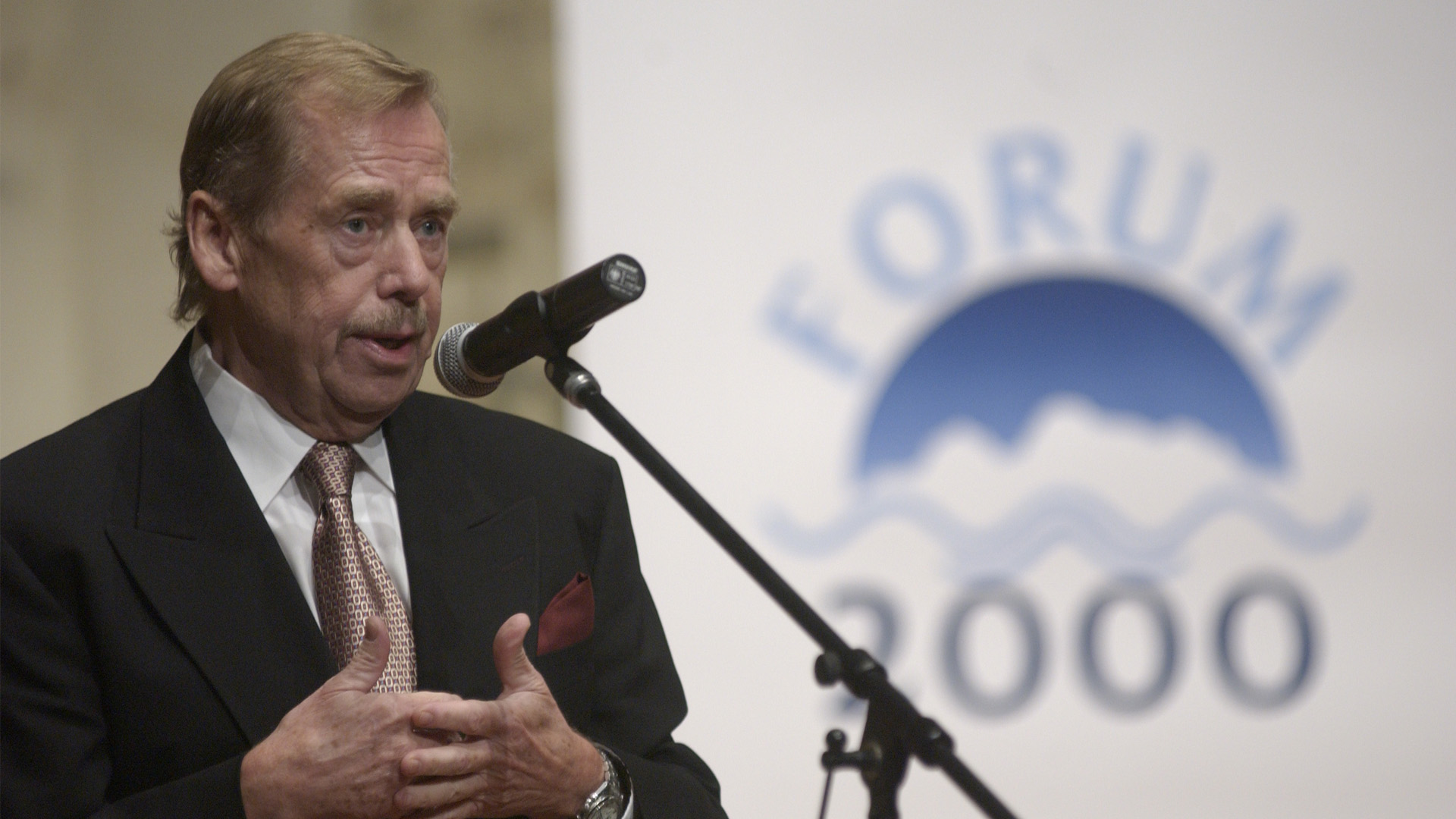
1. HAVEL’S LEGACY: THE COURAGE TO LIVE IN TRUTH
“Change begins at the moment a person refuses to accept a lie as the norm and stops saying, ‘That does not concern me,’” - Miloš Vystrčil, President of the Senate of the Parliament of the Czech Republic.
Nearly five decades after Václav Havel wrote The Power of the Powerless, the conference revisited his ideas and considered how they could be put into practice in a world once again shaped by authoritarianism, fear, and resignation.
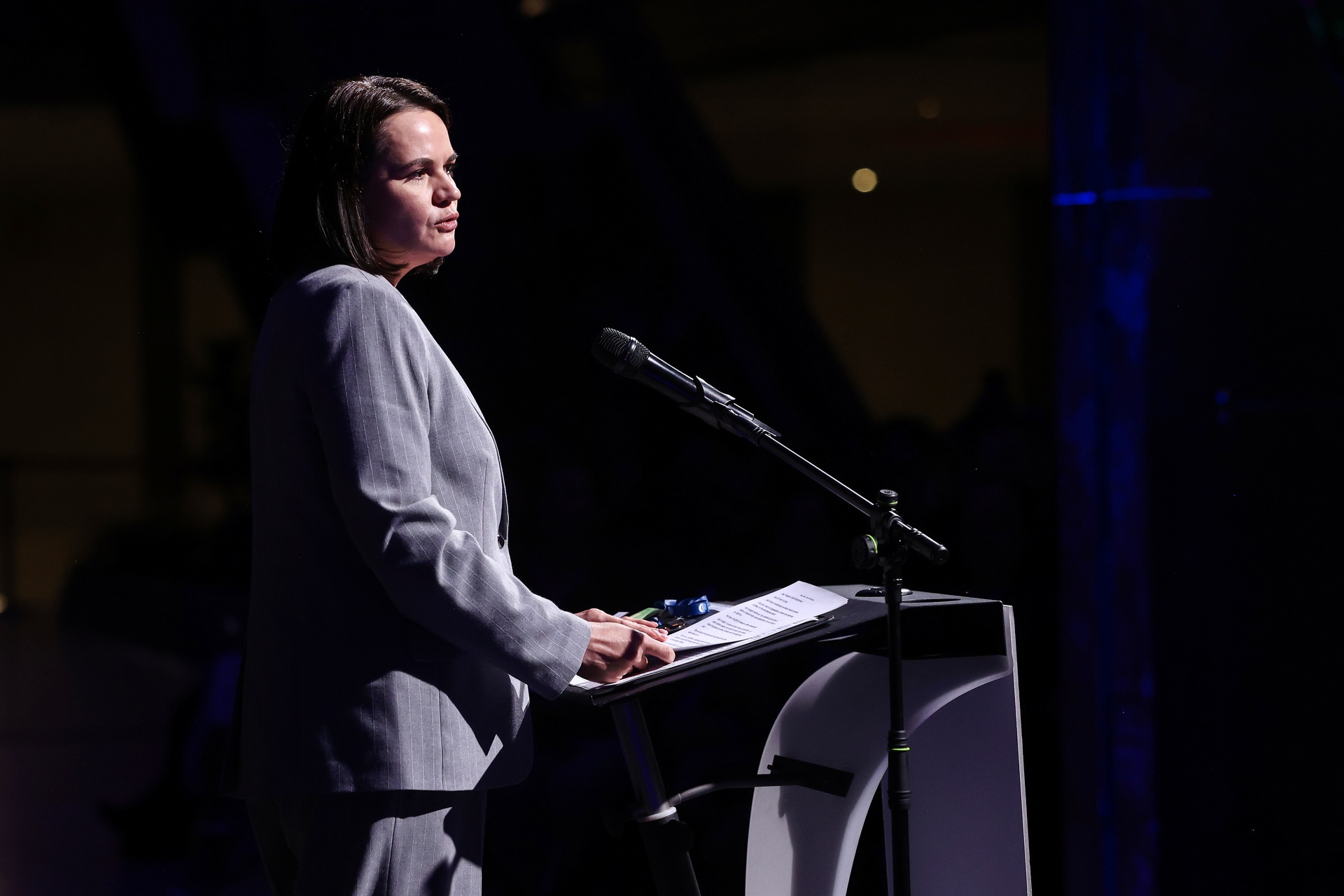
Havel understood that oppressive systems are sustained not only by those who rule, but also by the everyday compromises of those who feel powerless to resist. For Sviatlana Tsikhanouskaya, leader of the Belarusian democratic opposition, living in truth is neither abstract nor romantic. The struggle for freedom, she reminded participants, is paved with “tears, suffering, and the sacrifice of ordinary people who quietly do what is right, without any certainty of success.” Living in truth means refusing to regard injustice as normal, dictatorship as permanent, or change as impossible.
Courage, however, must be joined by responsibility. “Havel symbolizes not only courage, but also a call to responsibility,” noted Michael Žantovský, former Executive Director of the Václav Havel Library. Carl Gershman, Founding President of the National Endowment for Democracy, recalled another Havelian insight: even a moral act with no immediate or visible political effect can gradually acquire political significance. The powerless become powerful through accumulated acts of truth, responsibility, and solidarity.
Havel’s legacy is therefore not a monument to the past, but a method for confronting the present. Democracy needs more than people who admire his courage. It needs people prepared to practice it—and to accept responsibility for the consequences of their words and actions.
2. A REBALANCED ALLIANCE MEANS A STRONGER EUROPE
“Without credible security and defense, there is no democracy. And it also works the other way around, because democracy underpins security and defense.” — Benedetta Berti, Secretary General of the NATO Parliamentary Assembly
Recent tensions have prompted questions about the future of transatlantic relations. Yet the message emerging from the conference was neither rupture nor a return to the old status quo. The partnership will endure, but with a different distribution of responsibilities and a stronger European pillar.
Dalia Grybauskaitė, former President of Lithuania, acknowledged that unpredictability from partners initially came as a shock. “But now it has made us stronger,” she said. “It has made us stronger in defense and in our self-confidence. It teaches us how much we can do ourselves.” Alexandr Vondra, Member of the European Parliament, reached a similar conclusion: NATO will survive, but the balance of power and responsibility within it must shift.
Ukraine is central to that transformation. Roderich Kiesewetter, Member of the German Bundestag, argued that Europe must say clearly that “Ukraine must win and Russia must leave Ukrainian soil.” Europeans are not neutral intermediaries in this conflict. They must support Ukraine and pave the way for its membership in the European Union and NATO. Ukraine’s battle-tested military capabilities should ultimately become part of Europe’s defense architecture.
This rebalancing should strengthen rather than weaken the alliance. A Europe with greater political will, military capacity, and confidence would be better equipped to contribute to collective security and sustain cooperation with the United States. As Tawakkol Karman, Nobel Peace Prize laureate and Yemeni human rights advocate, argued, “The international order has been destroyed, and the European Union should fill the vacuum. The world needs European power and credibility.” Europe’s task is to develop that power while preserving the democratic values that give it legitimacy.
3. AI: THE NEW INFRASTRUCTURE OF POWER
“Technology should strengthen human freedom and resilience, not diminish our autonomy or place decisions about our future beyond meaningful public control.” — Petr Pavel, President of the Czech Republic
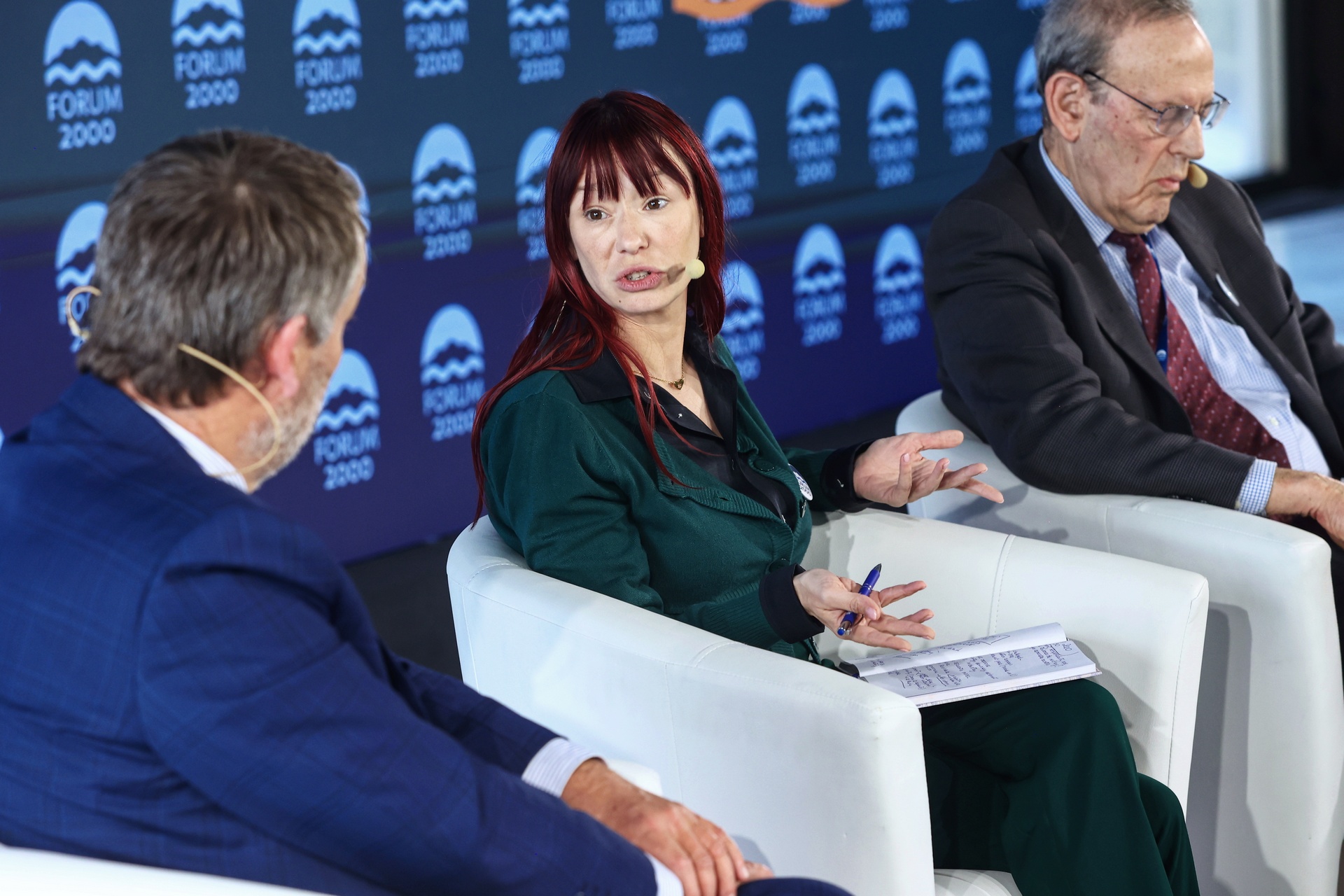
Artificial intelligence was not confined to a technology panel. It surfaced in discussions about Generation Z, SLAPPs, elections, security, warfare, and geopolitical competition. Its near-constant presence conveyed one of the conference’s clearest messages: AI is becoming part of the infrastructure through which power is exercised and contested.
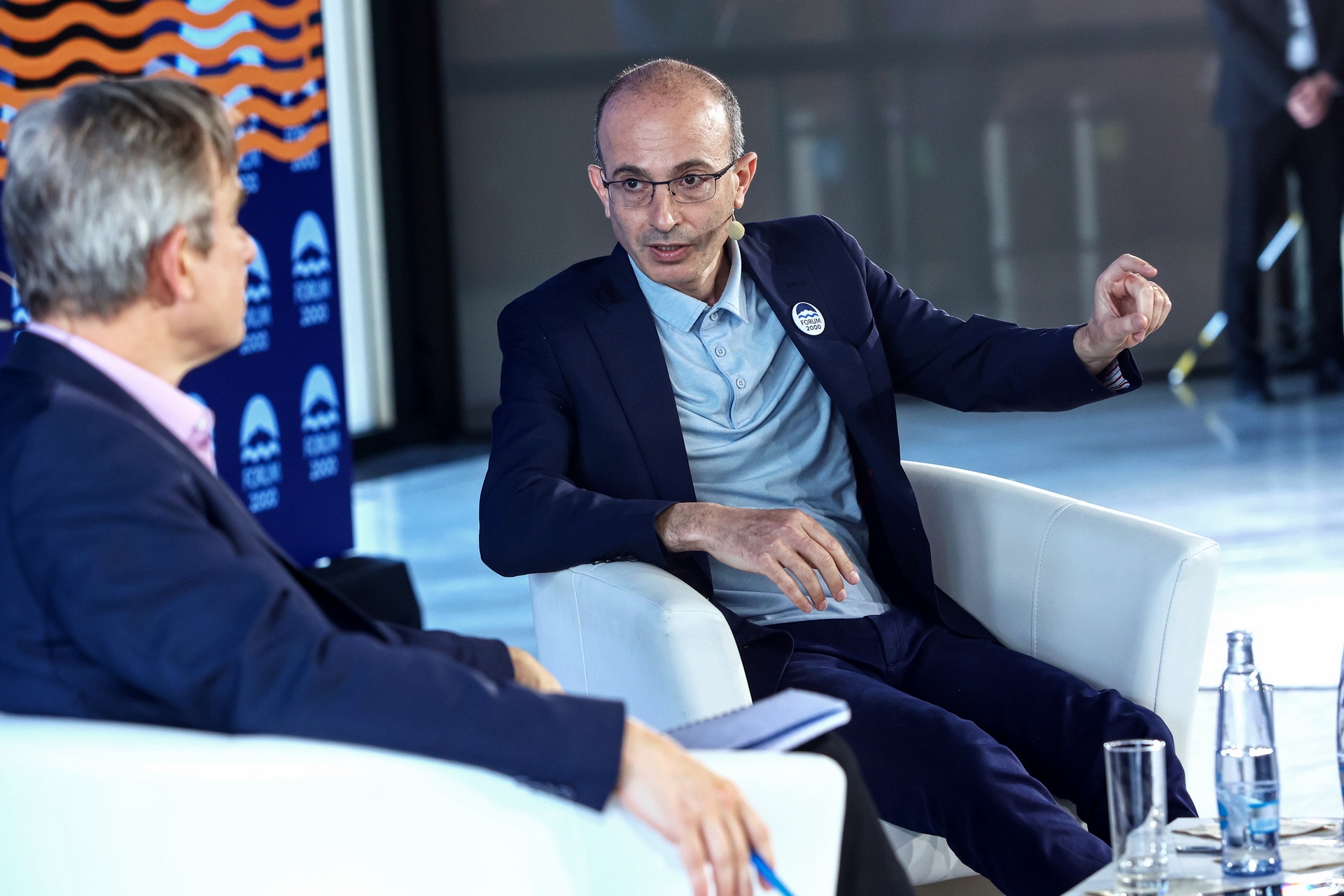
Yuval Noah Harari, historian and Distinguished Research Fellow at the Centre for the Study of Existential Risk at the University of Cambridge, warned that AI is more than another instrument for producing disinformation. Earlier forms of propaganda competed for mass attention. AI can create what he called “mass intimacy”: individualized relationships through which political and commercial actors can understand, influence, and manipulate people at scale.
For journalists, activists, and public-interest organizations, AI presents both opportunities and risks. It can help analyze information, expose disinformation, and document human rights violations. It can also enable surveillance, generate convincing fabrications, and erode the shared trust in facts that democracy requires.
The geopolitical consequences are equally significant. “The US and China are leading the AI race. Everybody else is on the menu; they are not at the table,” Harari warned. “And if they want to do something about it, they have to come together.” Countries unable to develop or govern their technological infrastructure risk becoming dependent on decisions made elsewhere. Smaller democracies will therefore need international cooperation to retain meaningful influence.
This outcome is not inevitable. “The most basic safeguard is politics,” Harari argued, rejecting the message that the AI revolution has already moved beyond democratic control. Governments can still require transparency and accountability, protect vulnerable groups, and ensure that people know when they are interacting with machines. The decisive question is whether citizens will retain the power to determine who controls AI, whom it serves, and where its limits lie.
4. SMALL STATES ARE NOT POWERLESS
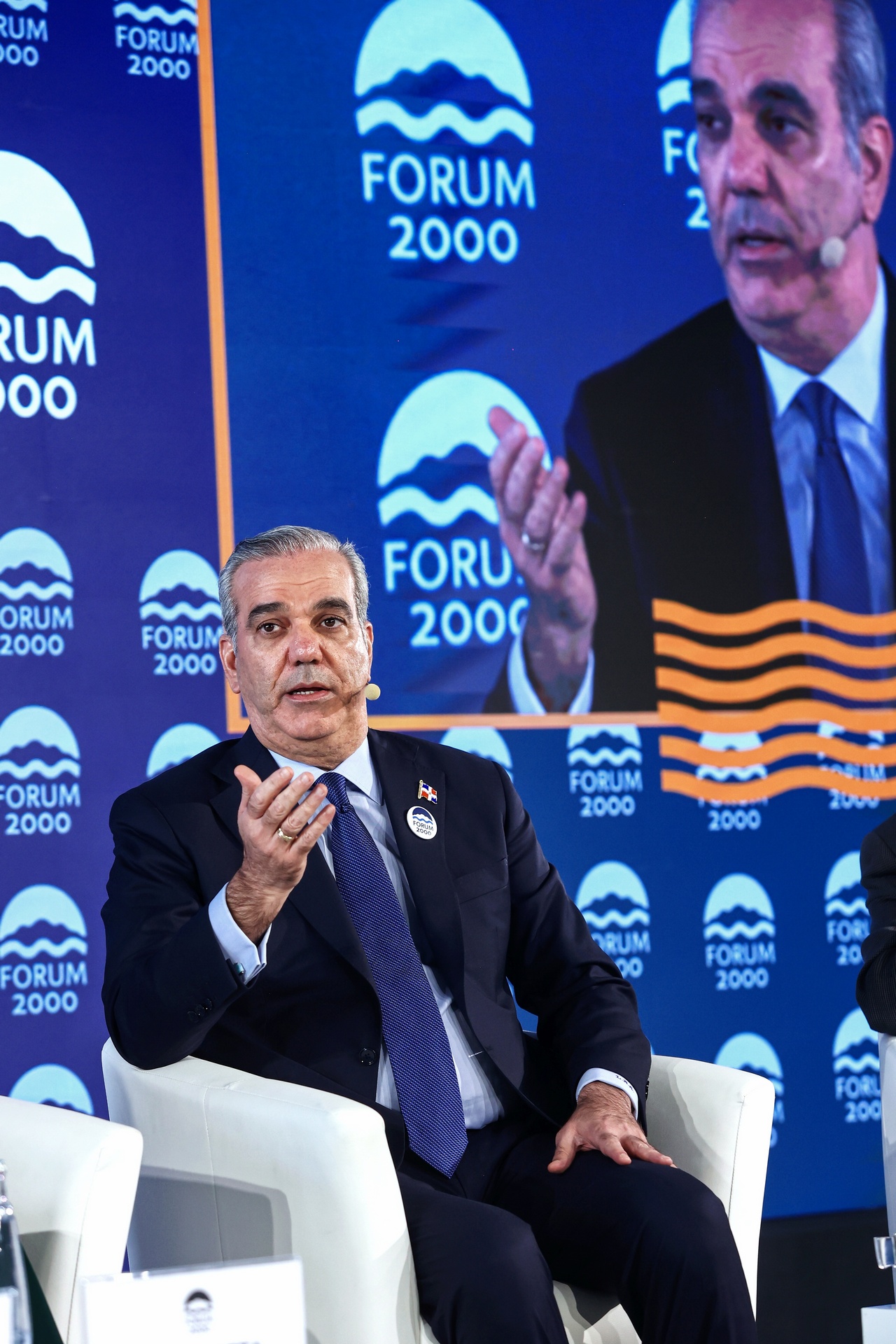
“Multilateral organizations need to become more effective. We need strong and efficient international institutions.” — Luis Abinader, President of the Dominican Republic
For small states, effective multilateral institutions represent an essential protection. As the international order becomes increasingly multipolar, smaller countries risk being confined to the spheres of influence of more powerful states. Yet the discussions at Forum 2000 challenged the assumption that size determines agency. Rules, institutions, and international cooperation allow smaller countries to defend their sovereignty and influence decisions that they could not shape alone.
That capacity also depends on democratic resilience at home. Abinader warned that corruption can become “a cancer for democracies”: elections alone cannot protect freedom when institutions are weak or the judiciary lacks independence. A state’s ability to act internationally begins with public trust, respect for the rule of law, and institutions capable of resisting internal and external pressure.
Small states can also expand their room for maneuver by avoiding dependence on any one power. Armen Grigoryan, former Secretary of the Security Council of Armenia, described how his country reduced the share of its arms purchases from Russia from 96 percent to less than 10 percent. His conclusion extended beyond defense: monopolies are dangerous not only in markets, but also in international relations. Diversification is therefore more than a diplomatic preference; it is a way of protecting sovereignty.
Regional integration can turn national agency into collective influence. Milo Đukanović, former President of Montenegro, pointed to European Union enlargement as one of Europe’s most successful policies, while warning that formal progress toward accession cannot substitute for democratic development. Luis Almagro, former Secretary General of the Organization of American States, added that cooperation must remain grounded in principles and a moral purpose.
Small states may lack the military and economic weight of larger powers, but they are not powerless. Strong institutions, diversified partnerships, regional cooperation, and an effective rules-based order can give them the collective capacity to shape their own future.
5. GEN Z: REDEFINING DEMOCRATIC POWER
“Young people do not necessarily want to belong to a single NGO or political party. They want to be part of change.” — Kimberly Barrios, Vice President and Co-Founder, Network of Young Artists for Social Justice, Guatemala
From Africa and Latin America to Serbia, Bangladesh, and India, Generation Z has become a consequential force for democratic change. Digitally connected and skeptical of traditional organizations, young people are not withdrawing from public life. They are finding new ways to enter it.
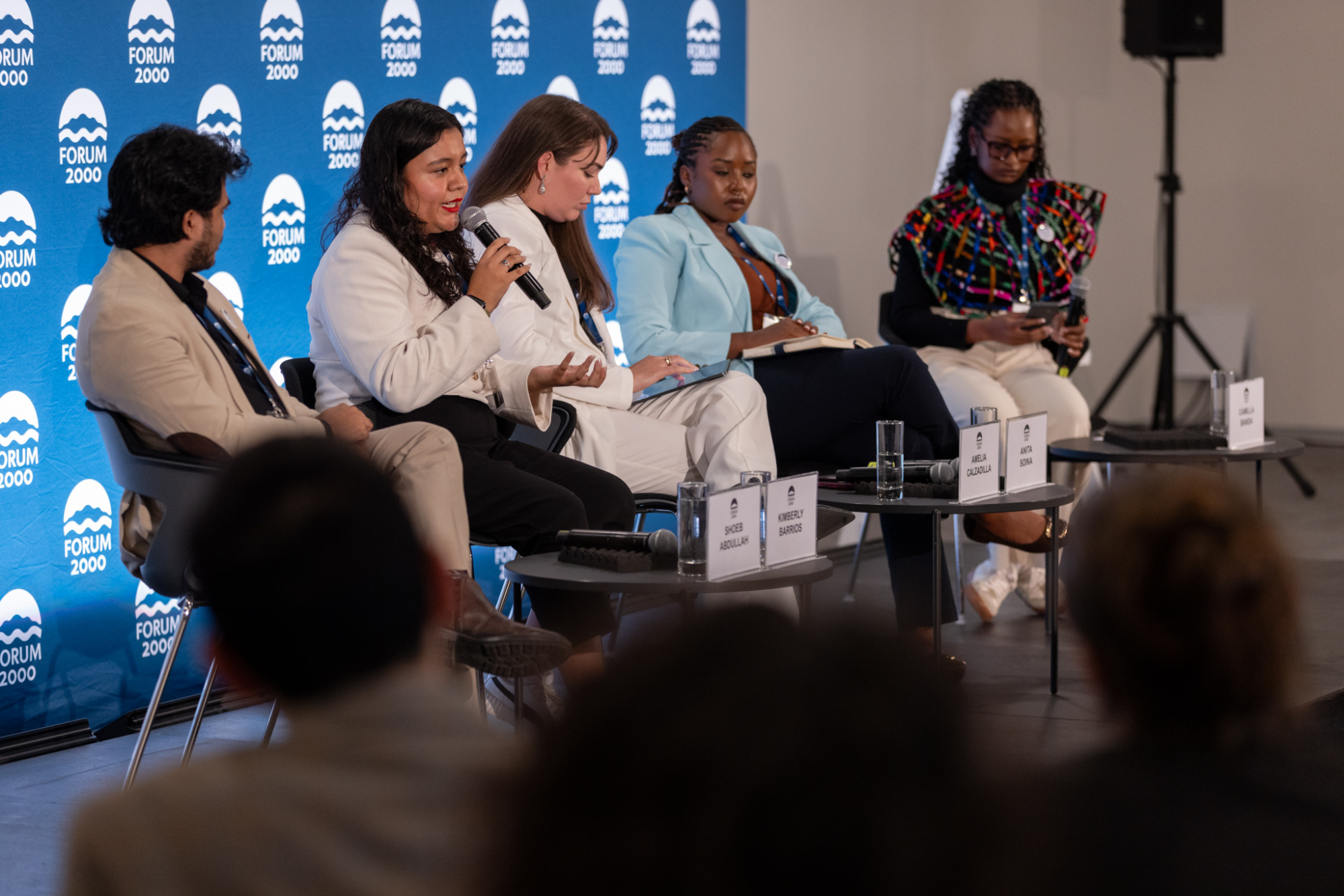
In Africa, where young people represent a large share of the population, their democratic role is already visible. “Youth are leaders, organizers, funders, and so many other things,” said Anita Soina, Founder of the Soina Foundation and member of Democratic Solidarity Africa. Yet, as Shoeb Abdullah, Executive Director of Activate Rights in Bangladesh, observed, political infrastructure was built by others, not by young people. Gen Z therefore often mobilizes outside parties and established NGOs, through informal networks, digital communities, and art.
Myanmar shows what this resistance can demand. The 2026 Forum 2000 International Award for Courage and Responsibility honored the General Strike Coordination Body and activists Tayzar San, Nan Lin, and Htet Myat Aung. Their networks have continued to organize under extreme repression; Htet Myat Aung was tortured and sentenced to 37 years in prison. Their example shows that this generation can do more than mobilize quickly: it can sustain solidarity and keep a democratic movement alive at extraordinary personal cost.
The challenge is to turn mobilization into lasting democratic influence. Youth movements remain vulnerable to repression, exhaustion, internet shutdowns, and the loss of momentum after protests end. They need flexible funding, protection, intergenerational cooperation, and a genuine role in decision-making. The future of democracy may depend on whether established institutions are prepared to trust young people not only to protest, but also to organize and lead.